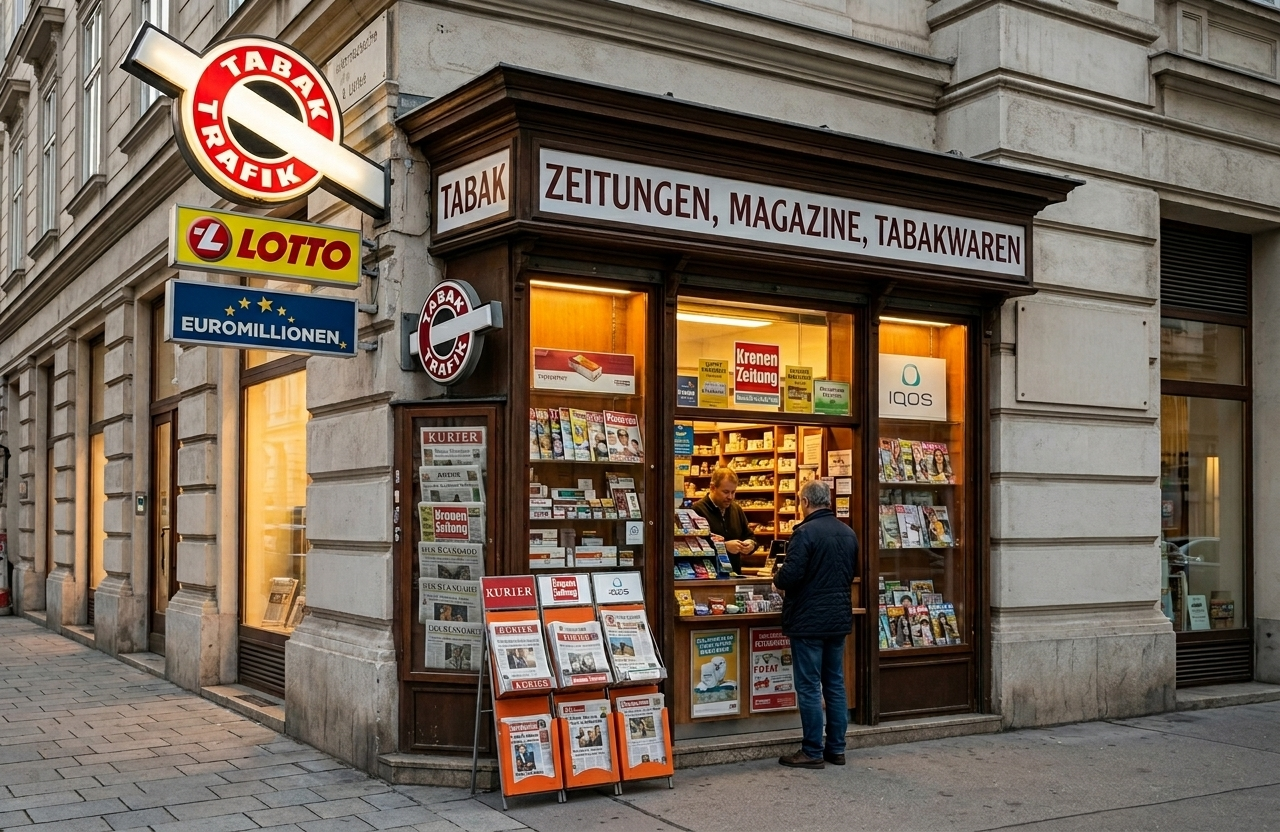
The transaction used to be simple. A customer walks into the Trafik or the petrol station shop, names their brand, pays, leaves. Fast, predictable, daily.
That picture is still partly true. But only partly.
In Austria, the regulatory landscape for nicotine products shifted fundamentally on 1 April 2026. Under amendments to the Tobacco Monopoly Act, nicotine pouches, e-cigarettes and e-liquids are now regulated from import to wholesale and retail. Going forward, nicotine pouches may only be sold in licensed Trafiken. In Germany, nicotine pouches remain in a regulatory grey area — not explicitly legal, not explicitly banned — while illicit trade grows. The market is changing in both countries, but in very different ways.
What has not changed: the customers who still buy have clear expectations. And those expectations have risen.
Who buys tobacco and nicotine products in 2026 — and what are they actually buying?
The core customer of tobacco and nicotine retail is an adult in their mid-twenties to mid-forties. A generation accustomed to on-demand access: same-day delivery, contactless payment, 24-hour availability. They bring those expectations to every purchase — including tobacco and nicotine.
And the product has shifted. Traditional cigarettes are declining; alternatives are growing. The Haypp Group's Nicotine Pouch Report 2025 documents a 37 per cent growth in the German nicotine pouch market in 2024 alone. The customer base is largely the same — the product has changed.
We call this the availability gap: the moment when a purchase impulse exists but no suitable offer is within reach — because the shop is closed, the queue is too long, or the right product is out of stock. Every one of those moments is lost revenue that leaves no trace in any analytics system.
Tobacco and nicotine retail in 2026: impulse beats planning
One thing has not changed: tobacco and nicotine products are impulse and habit purchases. Nobody plans a cigarette run three days in advance. The impulse arises now — and wants to be satisfied now.
The role of Trafiken, petrol station forecourts, convenience stores, food retailers and specialist tobacconists has evolved. These are no longer just functional last resorts — they are flexible everyday shopping alternatives for time-pressured consumers who value speed and reliability above all else.
The tobacco and nicotine buyer is the archetype of this customer. They are not browsing. They arrive with a specific product in mind. A queue, a busy cashier, an empty shelf — and they go elsewhere.
Five expectations tobacco and nicotine buyers bring today
1. Availability — including outside opening hours
Purchase impulses for nicotine products are strongly time-dependent. A customer who runs out at 10pm wants to buy now — not tomorrow morning when the Trafik opens.
The 37 percent growth in German nicotine pouch sales in 2024 was driven in part by online availability — the channel that is accessible whenever the customer needs it. For stationery retailers, the message is clear: customers go where the product is available when they need it. Retailers who are accessible around the clock win.
2. Speed — no tolerance for waiting
Nicotine pouch users consume an average of 4.4 cans per week according to the Haypp Group Nicotine Pouch Report 2025. These are regular, routine purchases. Routine buyers do not want interaction — they want efficiency. Every minute spent queuing is a minute too many.
3. Range — the right variants, always in stock
The range available in an Austrian Trafik or a German petrol station shop is broader than ever: traditional cigarettes, roll-your-own, heated tobacco, e-liquids and now — in Austria from April 2026 — nicotine pouches under the monopoly. According to the Nicotine Pouch Report 2025, the three most important purchase criteria for nicotine pouch buyers are strength (70%), price (63%) and flavour (50%), with mint the clear favourite at 82% of all cans sold in 2024.
Stocking the wrong variants — or running out of key strengths — means losing a loyal customer at the first visit, not the second.
4. Discretion — an underestimated purchase driver
Beyond availability, discretion is one of the key drivers of nicotine pouch growth according to the Haypp Group. A meaningful share of buyers actively prefers purchase situations where no social interaction is required. The discreet and convenient nature of nicotine pouches — suitable for use in any environment without breaking social norms — is a central part of their appeal. A retail format that enables anonymous, pressure-free purchase reaches a segment that would otherwise look elsewhere.
5. Reliability — the right product, every time
Tobacco and nicotine products are habit purchases. Customers typically buy the same brand, the same strength, the same format — every time. A gap on the shelf is not a minor inconvenience. It is a concrete reason to change their regular retailer.
The Scandinavian market illustrates what happens when product availability and format evolution align. Haypp Group's study of over 19 million purchases in Sweden and Norway between 2018 and 2025 found that nicotine pouches overtook traditional snus in both markets. In Sweden, market share rose from 5 percent in 2018 to 55 percent in 2025. Scandinavia is widely regarded as a test case for what other European markets — including Austria and Germany — could look like within the next decade.
The regulatory divide: Austria and Germany in 2026
The retail opportunity for nicotine pouches exists in both markets — but the regulatory context differs fundamentally.
In Austria, the picture is clear and the opportunity is immediate. From 1 April 2026, nicotine pouches fall fully under the Austrian Tobacco Monopoly Act and may only be sold through licensed Trafiken and authorised specialist outlets. A customer base that previously bought online or through unregulated retail channels is now directed, by law, to the Trafik. The reform integrates e-cigarettes, e-liquids and nicotine pouches into the strict state tobacco monopoly, ending previously unregulated distribution paths and introducing volume-based taxation. For well-prepared operators, this represents a concrete and immediate new revenue stream.
In Germany, nicotine pouches remain in legal limbo. The German government has reclassified nicotine pouches as food products to restrict sales, effectively prohibiting stationery retail in most contexts. Bremen's state government warned in October 2025 that illicit trade in e-cigarettes and nicotine pouches is active and rising — with “nearly every inspection” finding violations. EU-wide regulation through the TPD3 is not expected before 2027/2028. For German petrol station operators, convenience retailers, specialist tobacconists and food retailers, the focus for now remains on reliable, fast and discreet sales of traditional tobacco products and e-liquids.
Why the nicotine retail market is growing despite declining smoking rates
The decline in traditional smoking rates is real. But it does not tell the full story.
Overall demand for nicotine products is not falling at the same rate — it is shifting. From cigarettes to heated tobacco and e-liquids. From fixed opening hours to spontaneous impulse. From personal interaction to discreet, fast purchase.
94 percent of former smokers who switched to nicotine pouches say they feel better afterwards. Nicotine pouches are perceived as significantly less harmful than cigarettes — risk rating 4.8 versus 8.9 on a scale of 1 to 10. (Nicotine Pouch Report 2025, Haypp Group)
Retailers who stock the new range, keep it available and make purchase easy are well positioned. Not despite the change, but because of it. Austria's April 2026 reform signals that regulators are moving toward formalising this shift — bringing the category into a structured adult-use framework rather than banning it. Germany and the wider EU are likely to follow with their own frameworks within the next few years.
TobaccoButler24 — automated tobacco retail for Trafiken, petrol stations, specialist tobacconists and food retailers
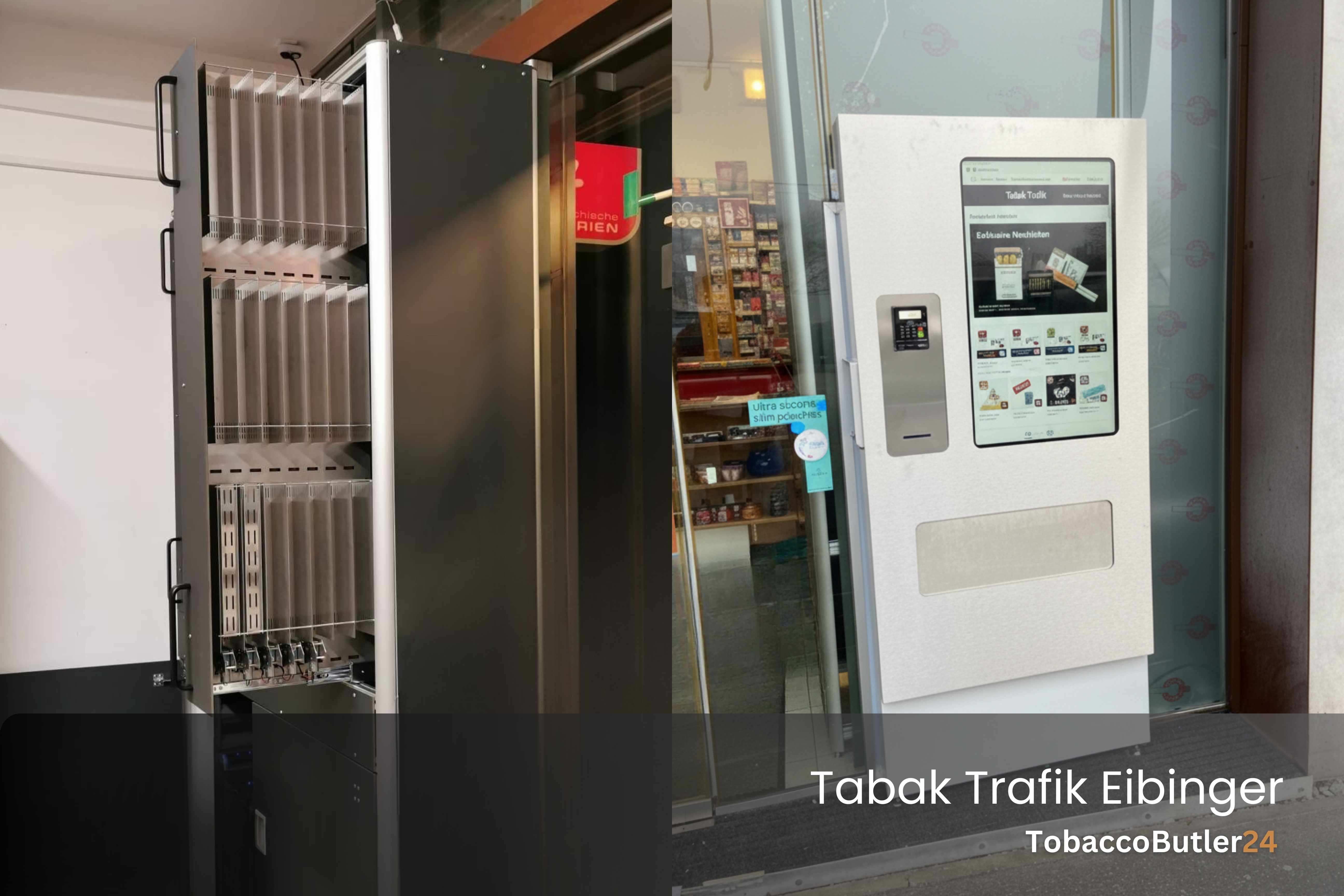
TobaccoButler24 develops automated retail solutions for the DACH tobacco market — for Austrian Trafiken, petrol station operators, specialist tobacconists and food retailers who want to offer their customers exactly what they expect today: fast, discreet and reliable availability, around the clock.
The system addresses the availability gap directly:
- Automated age verification — compliant with Austrian tobacco monopoly law (TNrsg) and German youth protection legislation (JuSchG)
- 24/7 autonomous operation — no additional staff required
- Fiscal compliance: RKSV-compliant (Austria), GoBD-compliant (Germany)
- Fully compatible with the Austrian Tobacco Monopoly Act from April 2026, including nicotine pouches and e-liquids
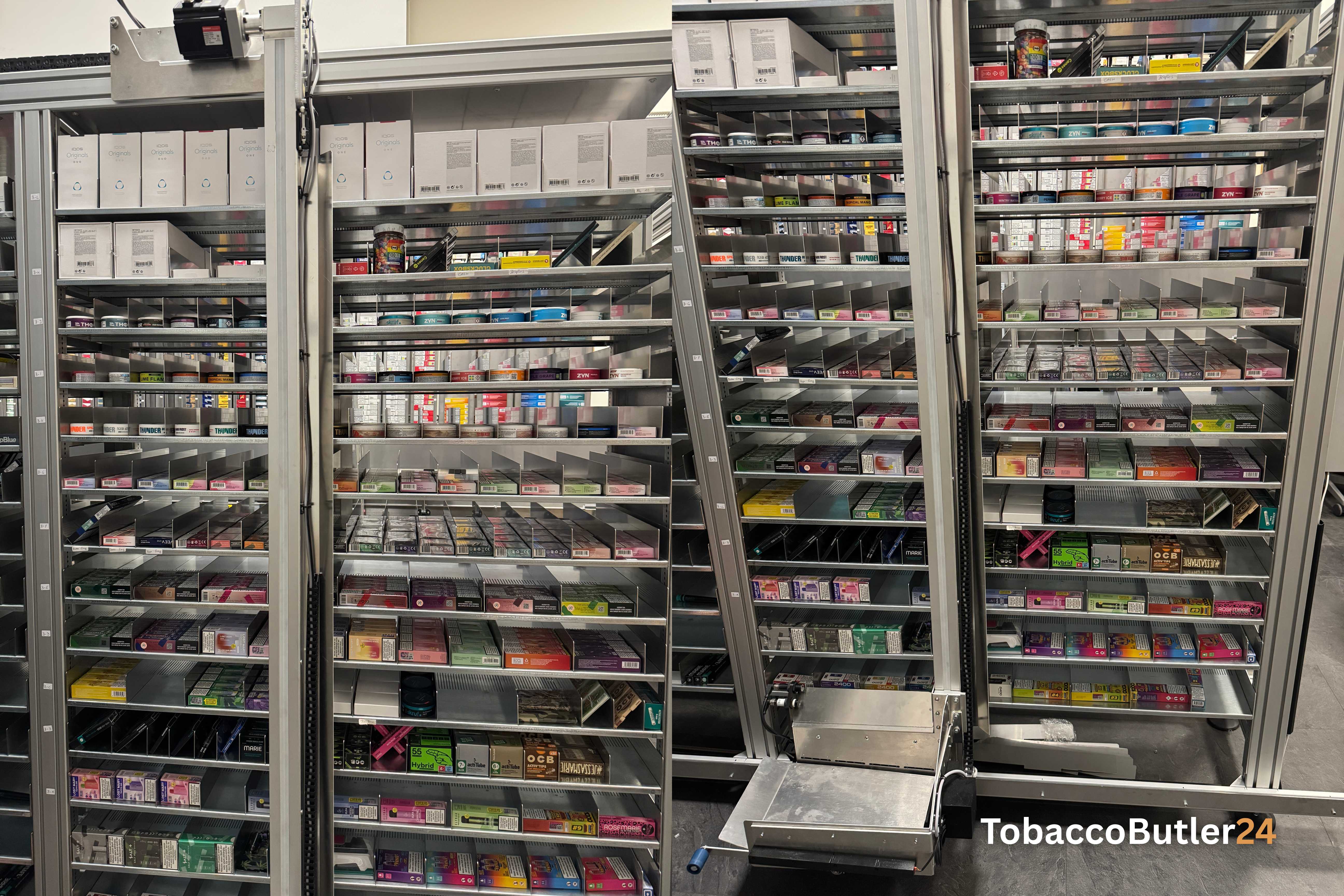
- Support for all relevant product categories: cigarettes, roll-your-own, heated tobacco, e-liquids, nicotine pouches (AT)
- Up to 1,000 SKUs and 10,000 units
TobaccoButler24 is not just a solution for customers who would otherwise be lost. It is a genuine revenue opportunity with an excellent return on investment: every hour outside opening times becomes a sales window. Every queue that does not form is a customer who comes back.
Find out more about TobaccoButler24
Frequently asked questions
- What do tobacco and nicotine buyers expect from a Trafik, petrol station or convenience retailer today?
Speed, discretion, reliable stock and a broad range including alternative nicotine products. These expectations apply equally to food retailers carrying tobacco — and match what consumers expect from any modern convenience channel.
- What changed in Austria for nicotine pouches from April 2026?
From 1 April 2026, Austria brought nicotine pouches, e-cigarettes and e-liquids under the state Tobacco Monopoly Act. These products may now only be sold through licensed Trafiken and authorised specialist outlets. Online sales of vaping products are banned. The reform introduces volume-based taxation and standardised youth protection across all sales channels.
- What is the legal status of nicotine pouches in Germany in 2026?
In Germany, nicotine pouches remain in a legal grey area. The government has reclassified them as food products, effectively prohibiting stationery retail in most states. Enforcement varies significantly by region. EU-wide regulation through the TPD3 is not expected before 2027/2028. Traditional tobacco products and e-liquids are not affected and continue to be sold through petrol stations, specialist tobacconists and food retail.
- What is the availability gap in tobacco and nicotine retail?
The availability gap is the moment when a purchase impulse exists but cannot be fulfilled — because the shop is closed, the queue is too long, or the right product is not in stock. It is the largest source of lost revenue in tobacco and nicotine retail that does not appear in any conversion or footfall data. Closing the availability gap is the core proposition of TobaccoButler24.
- Why are more consumers switching from cigarettes to alternative nicotine products?
According to the Haypp Group's Nicotine Pouch Report 2025, 94 per cent of former smokers who switched to nicotine pouches report feeling better afterwards. The products are perceived as significantly less harmful and offer a discreet, smoke-free alternative suitable for any environment. This perception shift is the primary structural driver of the move away from traditional cigarettes across the DACH region.